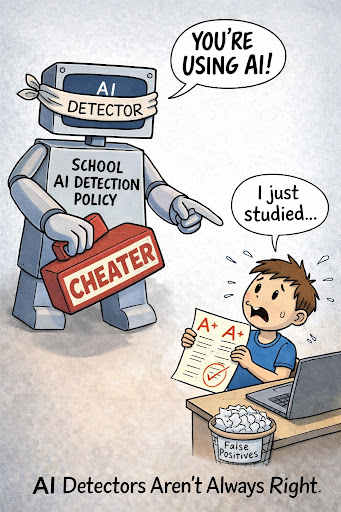
Artificial Intelligence (AI) detectors are used to determine whether a student used AI to complete an assignment – but they’re usually wrong (and yes, I know how to use an em dash). As more and more teachers rely on AI detectors to analyze students’ work, concerns are growing about how this affects students, jeopardizes their academic records, and puts them in an uncomfortable position, having to advocate for themselves when they were never in the wrong.
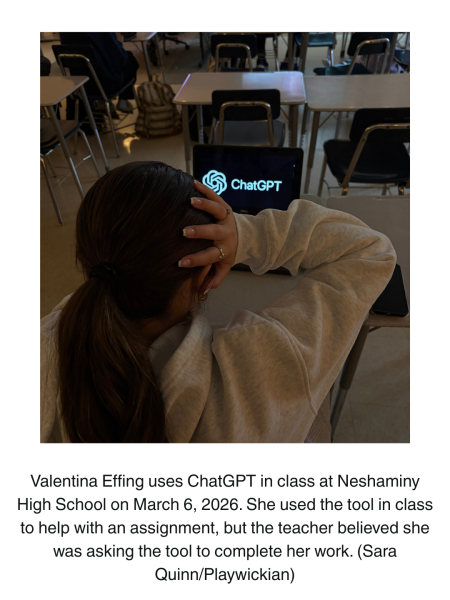
Many high school students choose to use AI not because they want to cheat but because of the pressure of deadlines and academic expectations. With involvement in multiple extracurricular activities, a job, taking multiple classes, and preparing for college, turning to AI is the fastest way to generate ideas, clarify assignments, and overcome writer’s block.
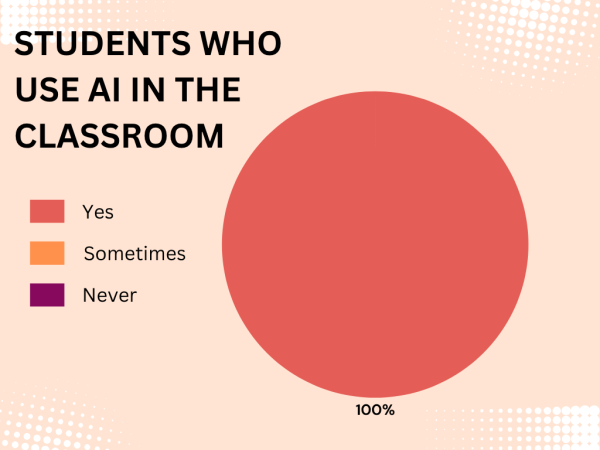
According to a survey of Neshaminy High School (NHS) students, 100% of randomly selected students admitted to using AI in some way when doing their schoolwork.
The use of AI among students has increased rapidly, showing that it is now many students’ first resort for schoolwork.
“I don’t use it to do the work for me,” one NHS student explained. “I use it to help me when I don’t understand.”
Students clearly use AI as a support tool and less as a way to avoid doing their work.
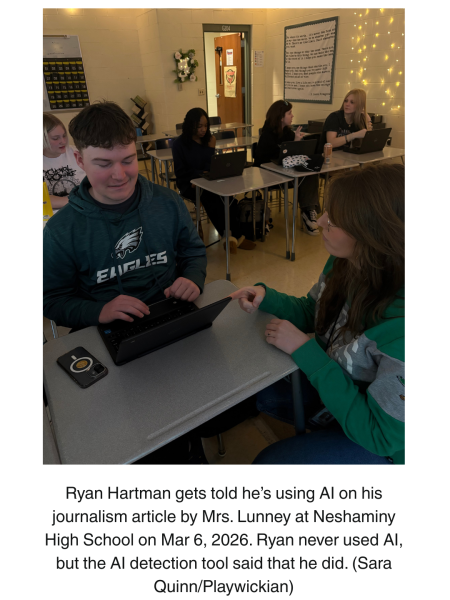
Something that isn’t discussed as much is the teacher’s perspectives on AI. Teachers are also navigating challenges involving the overuse of this new technological tool.
As classrooms across the United States are constantly changing and adjusting to technology, many teachers are growing concerned. A vast number of teachers are using AI to detect the authenticity of their students’ work, while also utilizing it for their own personal effectiveness to create and improve lesson plans.
“In today’s day and age, technology is a big part of who we are as a society, and it should be used to help aid in learning,” Madisen Ody, a Maple Point Middle School (MPMS) English teacher, explained.
Because of these concerns, many teachers have turned to AI detection to identify when technology crosses the line into plagiarism.
“But when someone uses AI and claims it as their own, that, to me, is the same as plagiarism,” Ody added.
With all the uncertainty that comes with the evolution of AI, there are numerous ways that teachers can respond when
students are caught using AI in their work.
When teachers were asked whether AI detectors accurately identified their students’ writing, over 50% of teachers surveyed said they weren’t confident in the AI detectors or didn’t trust them at all.
These statistics highlight that a significant number of teachers don’t believe that AI detection tools are accurate enough to be used in schools.
According to AI detection companies, none of these tools were ever meant to show proof of someone cheating.
“Learning Integrity Solutions are designed to be one, but not the only, tool in the educator and administrator toolkit, to inform conversations with students about their work,” a representative from Turnitin explained.
The well-known company also emphasizes the importance of transparency and understanding the purpose of student reliance rather than simply identifying its usage. Since Turnitin released its AI detection tool in 2023, it has focused on reducing the number of false positives.
While the acknowledgment shows that the company recognizes the extent to which AI should be relied on, it does also raise the question that schools should be asking themselves: If literal AI companies are a conversation starter rather than a final judgment on a student, shouldn’t educators be using these tools in the same way? They should reconsider how heavily they may rely on certain tools when they’re grading their students’ work.
The advancement of technology may be increasing quickly, but the fairness in the education system should never fall short.
“Turnitin recognizes the importance of transparency and the need to go beyond indicating whether AI was used, to understanding how and why AI was used,” the Turnitin representative noted.