

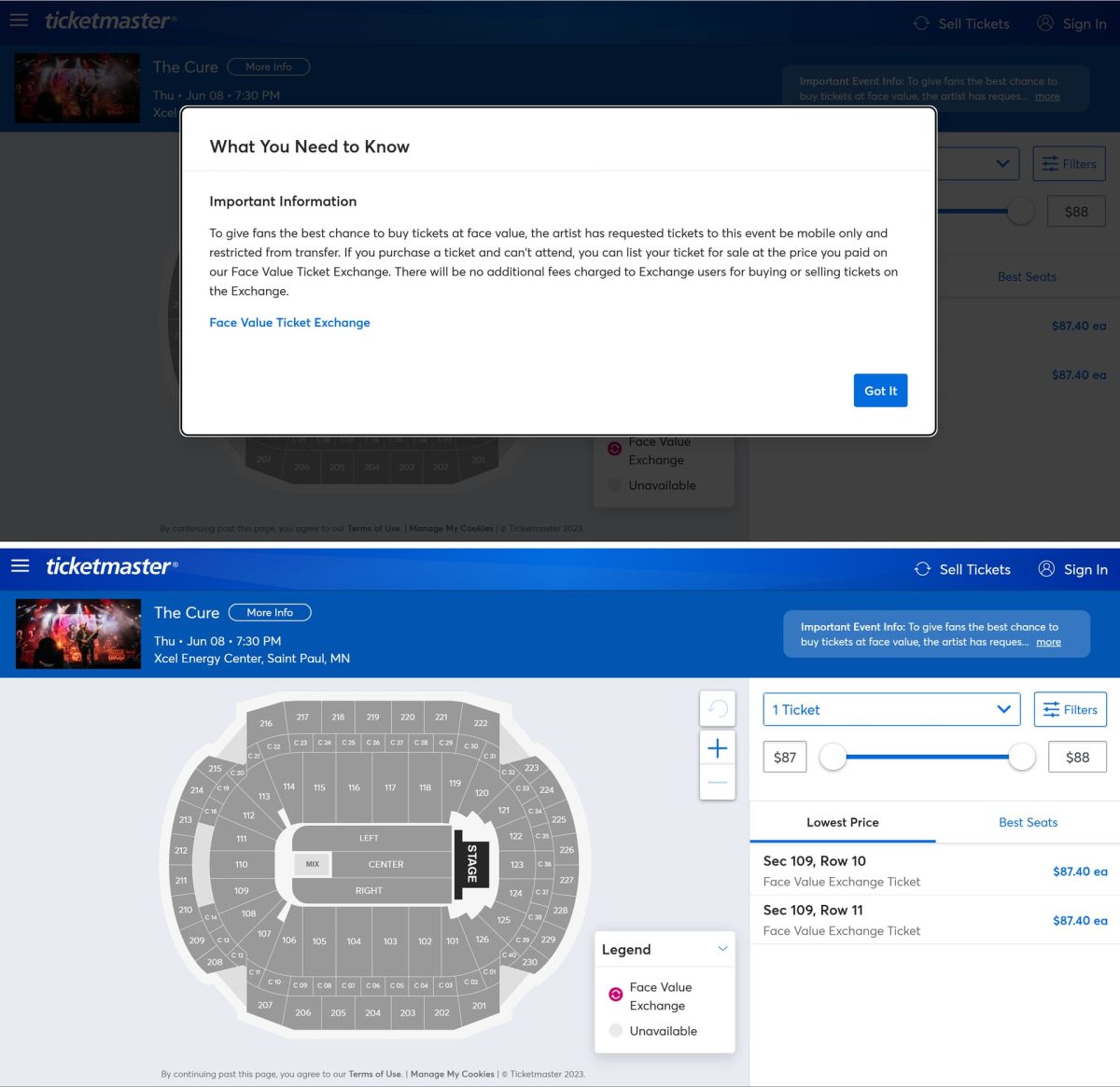
From spending thousands of dollars on tickets to standing shoulder to shoulder in an overcrowded stadium, the concert scene is dying, and it’s no wonder why.
Concert ticket prices are higher than they’ve ever been by an unquestionable margin. According to Pollstar, just 20 years ago, the average ticket price was $40; however, it has more than doubled, with the average ticket now costing between $98 and $135.
The prime example of this shift: Taylor Swift. With fans willing to pay exorbitant prices to see her Eras Tour, the average Swiftie wasn’t even shocked to see tickets reselling for up to $3,800. The worst part? Her audience is unaware of the issue.
Chloe Johnson, a Swift concert attendee, mentioned in an interview that she believed her tickets were “a reasonable price.”
While her tickets were nowhere near the high-end $3,800 resales, it should still be concerning to any concert-goer that, due to megastars like Taylor Swift, higher prices are becoming normalized. These followers’ devotion to their favorite singers creates demand justification, and as long as stadiums keep selling out, there’s no incentive for change. It’s a cycle that keeps Ticketmaster and major singers untouchable, while fans pay the price, literally.
It can be frustrating for people who have been attending concerts for years, and as someone who has witnessed the changes with my own eyes, I can say with certainty that the industry is taking a turn for the worse. However, as music-lovers, it is our duty to do something, or else we’re complicit in our own struggles. Fans think that change is out of our hands, but it’s not. There is one thing in particular that we can do: support smaller artists.
Despite being only 17, I have attended over 20 concerts without spending thousands of dollars, simply by supporting indie bands. Not to say I haven’t seen big bands, too, but if you find some more niche musicians that you enjoy, you can have all the fun of concerts at half the price, without compromising the experience. Live music will never die as long as we have indie creators to keep us coming to shows.
These shows are nothing like a big band concert. You’re not staring at a screen from 300 feet away; instead, you’re right there in the moment. Not only that, but you can talk to smaller artists after their sets. Most indie singers will usually hang around the merch booth at the end of the show, providing you with the opportunity to meet them in person, something you’ll rarely see from singers with millions of followers.
Right now, supporting indie musicians isn’t just about saving money; it’s a way of correcting the wrongs of the music industry. Every small ticket purchased, every local venue sold out, is a rebellion against Ticketmaster’s monopoly, trying to price you out of live music.
As fans, we decide what we spend our money on. Our choices shape the concertgoing scene. So next time you consider spending thousands to catch a glimpse of a superstar from a stadium’s nosebleeds, take a moment to look at the lesser-known artists near you. You may find something even better, and help keep live music alive for everyone.


