

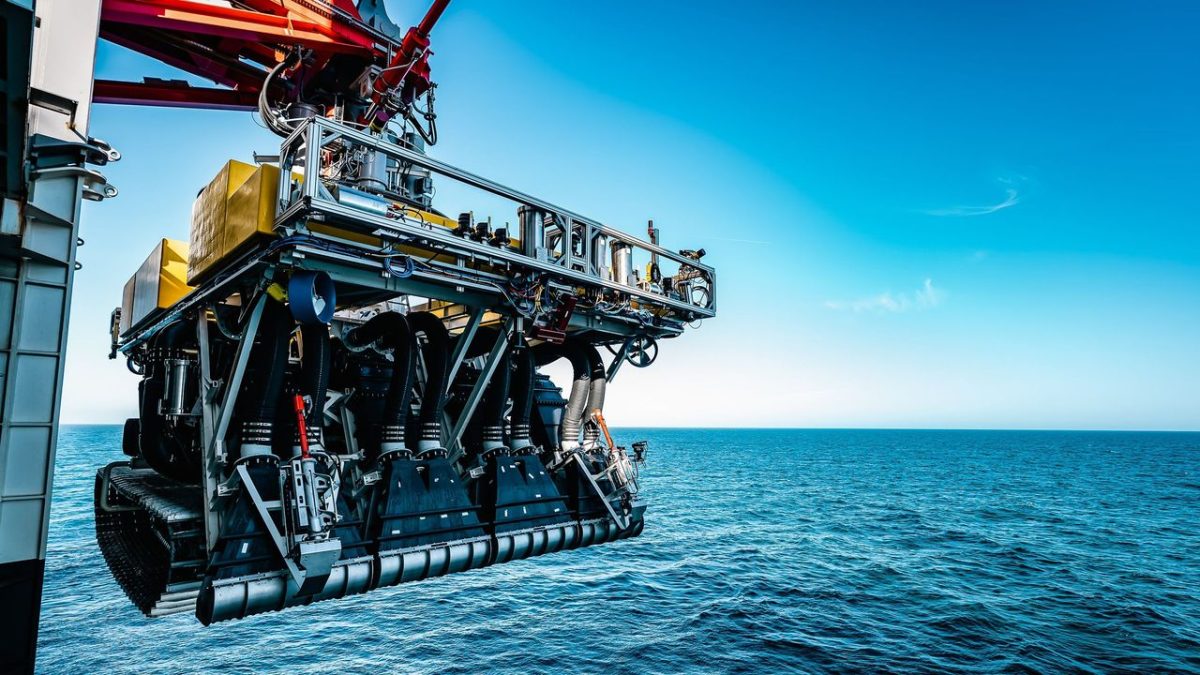
Deep-sea mining reaches its peak worldwide as of Oct. 2025, where shark species come face-to-face with extinction as deep-sea mining threatens the very existence of sharks.
Deep-sea mining is currently in demand due to an increasing need for critical materials such as cobalt, nickel, manganese, copper, and more.
“Deep-sea mining has been presented as a solution to the climate crisis because it could help extract precious minerals needed for climate action projects,” Alaina Wood, an environmental activist, said.
Sharks are already an endangered species, and deep-sea mining is increasing their risk of extinction. Sharks are among the most important animals in the marine ecosystems; without them, the food chain would crumble.
“They [sharks] help regulate the populations of species below them in the food chain. In turn, this prevents the overgrazing of critical habitats, such as seagrass beds, which support biodiversity and lead to a healthy ocean. Without them, it would affect everyone,” Cicely Clark, a shark researcher from the UK with her PhD in marine biology, expressed.
Sharks play a critical role in ecosystems, they have been around for almost 450 years. Now, scientists aren’t sure if they are going to be around for another ten years.
“Sharks are apex predators, which play a critical role in maintaining the health and balance of marine ecosystems, yet they face numerous threats, not just from deep-sea mining,” Clark expressed in an interview about the shark species.
Many factors contribute to the harm the ocean endures every day, with humans being the ocean’s biggest threat.
“Humans impact marine life in many ways, through pollution, overfishing,
habitat loss, and climate change,” Clark said. “The biggest threat is overfishing, and this impacts 100% of threatened shark species. This species is so important to marine ecosystems that we need to do anything we can to help.”
Deep-sea mining is one of the leading causes of biodiversity loss and rotting on the ocean floor. Not just hurting shark species, but all species that reside in the ocean.
“The reality is, it [deep-sea mining] would only make climate change worse. Wood stated. “That’s because deep-sea mining would release stored carbon and methane on the ocean floor as well as further contribute to biodiversity loss and the weakening of our oceans’ ability to effectively sequester carbon.”
The ocean is doing everything in its power to recover from the damage deep-sea mining has done. With questions circulating about whether the ocean will ever recover, or if it’s too far gone.
“In simple terms, it hasn’t. Woods was asked how the ocean is recovering, and she responded with, Even 50 years later, the
The ocean still hasn’t healed from the very first deep-sea mining test, dating back to around 1970.
Scientists, research facilities, and people around the globe are doing their very best to restrict deep-sea mining. Many regions around the world have either restricted deep-sea mining or banned it altogether.
Deep-sea mining has been a problem all over the world. Scientists every day are doing everything they can to help. Laws are continuously being put in place to help restrict deep-sea mining.
“With what little we know about deep-sea mining, it can cause irreparable damage to ecosystems. Woods said in the interview
That’s why 37 countries and nearly all American coastal states and territories have either outright banned or restricted deep-sea mining.”
Deep-sea mining is currently at its peak, and it’s only getting worse. Sharks are being killed every day so people can extract materials from our ocean.
We can only hope, with zero recovery so far, this is one warning shot we can’t ignore. Woods was asked if it would get any better. She said, “We have to do everything we can to help not just the animals, but the future of the world.”