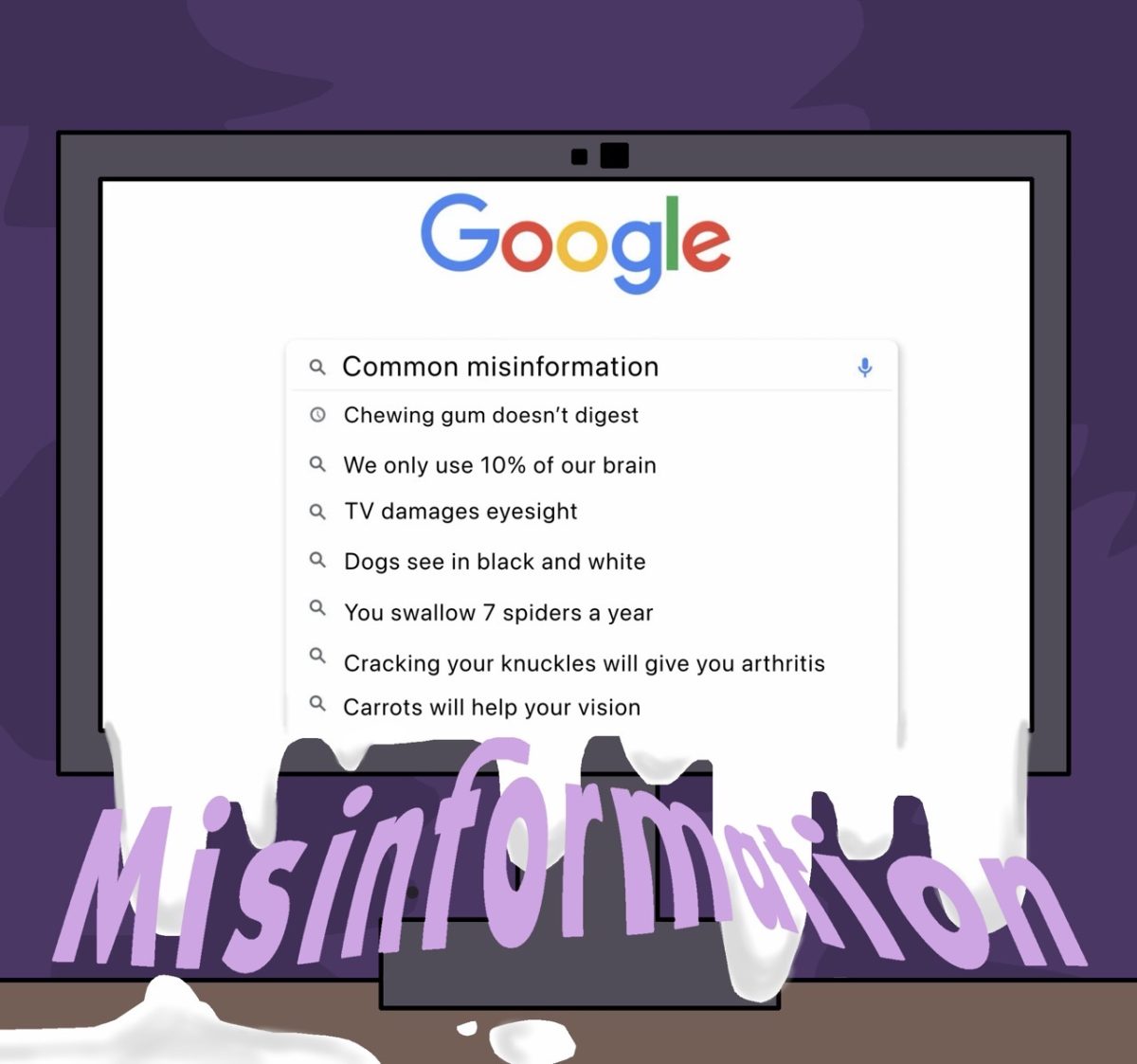
In today’s digital era, students encounter an unprecedented amount of information every time they open their browser, scroll through TikTok, or turn on the TV. Search engines, social media, and news platforms all place verified news, opinion pieces, and misleading sources side by side, often with a lack of clear distinction.
Students’ ability to analyze these sources’ credibility is no longer solely a classroom skill, but now a part of their everyday lives as well. The way schools teach students to identify “trustworthy” versus “untrustworthy” sources plays a crucial role in determining their ability to navigate this complex issue.
The Current Neshaminy Curriculum
As per the Neshaminy Curriculum and the state standards, the ELA department’s responsibility is to provide students with instruction on how to evaluate a source for its credibility.
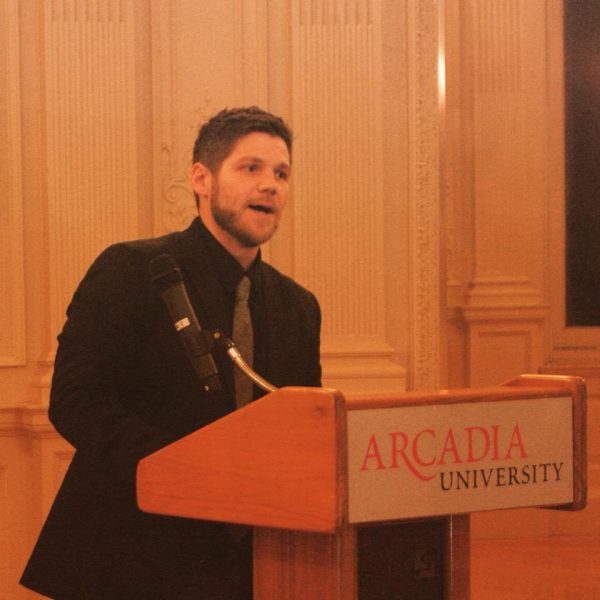
Pennsylvania’s ELA curriculum standards were last overhauled in 2014, as stated by Christopher DiCicco, lead teacher of Neshaminy’s Secondary English Language Arts (ELA). To put this in perspective: that means the ELA curriculum hasn’t seen a major revision since Neshaminy’s current seniors were in the first grade.
Since then, many social media platforms’ user bases have grown significantly, and it has become more accessible for anyone to create a website and utilize rapidly evolving generative AI tools.
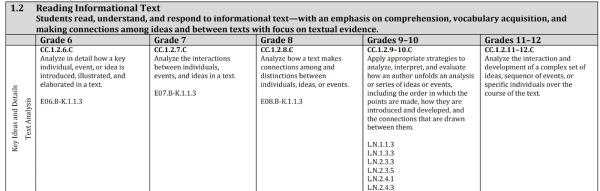
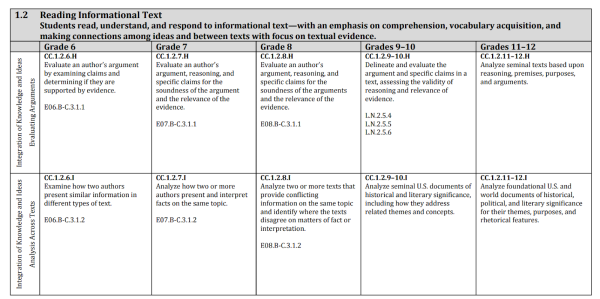
Despite these significant changes in the world’s online landscape, Neshaminy still expects students to be able analyze an author’s choices within a source, ultimately determining their credibility, by 10th grade.
Neshaminy’s Key Ideas course outline states that students, by 10th grade, should be able to: “Apply appropriate strategies to analyze, interpret, and evaluate how an author unfolds an analysis or series of ideas or events, including the order in which the points are made… and the connections that are drawn between them.”
However, research indicates that students may be lacking this skill.
A 2025 study by Common Sense Media found that over one-third of teens reported being misled by fake content online.
Another survey, conducted with Neshaminy’s 10th-12th-grade honors and Advanced Placement (AP) English students, sought to examine students’ ability to analyze sources with misinformation.
For this survey, participants were asked to evaluate the credibility of a misinformative source resembling a legitimate news website.
The site was in the style of a true crime documentary, accounting the history of Philadelphia’s most notorious serial killers. Throughout the site, there were several glaring issues that educators hoped students would pick up on, such as grammatical errors, no listed author, generalized statements without any evidence, and a lack of proper citations.

On top of this, two of the five serial killers named on the site were entirely fictional.
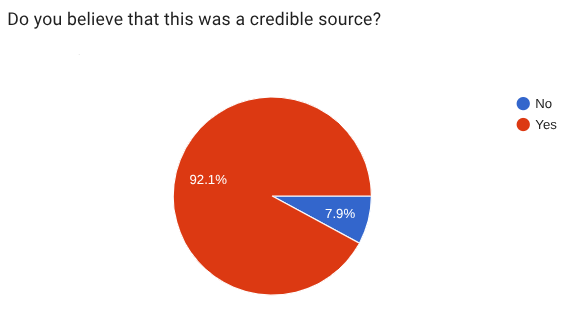
Less than 10% of students polled were able to accurately determine that the website was discredited.
If a student-made site created in a few hours is able to appear credible to a majority of Neshaminy’s honors and AP students, it raises important questions about how effective this current curriculum is.
Wikipedia
One of the first topics emphasized to middle school students
learning how to research is to avoid using Wikipedia as a source.
Educators often attribute this view of Wikipedia to the site’s open editing policy, a lack of peer review, and the possibility of vandalized content hosted on the website. As a result, when learning how to analyze sources’ credibility for research essays, teachers will seldom accept Wikipedia as a credible source.
Amanda Henry, an AP English teacher at Neshaminy High School (NHS), expands on the history of people’s views on Wikipedia.
“I think that [Wikipedia] got hate in the 2010s… some of that was teacher-driven, because we wanted [students] to search for other sources besides Wikipedia.”
Henry argued against the stereotype that teachers “hate” Wikipedia as a source. Rather, educators grasp the importance of students learning good research habits, especially at a developmental stage in their education.
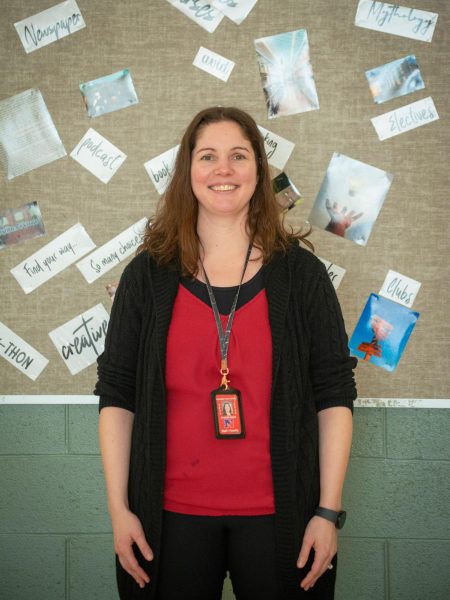
Henry understands that as students’ learning becomes more nuanced and they begin taking higher-level courses, things aren’t so simple, and the issue doesn’t boil down to “never use Wikipedia.”
When discussing the merits of the site, Henry admits Wikipedia “is peer-reviewed,” and that “they do cite their sources.”
Several educators argue that there is evidence that Wikipedia can be credible. In a study conducted by Professor Jon Beasley-Murray at the University of British Columbia, Beasley-Murray instructed his students to write a Wikipedia article on the books they read and submit it to Wikipedia.
These articles were fact-checked by a large team of the site’s “Wikipedians,” who each volunteer their time to help ensure that the site has the most accurate information possible. There are hundreds of thousands of active volunteers reviewing Wikipedia’s various articles every day.
These Wikipedians, after reviewing the articles, can grant them the status of “Good” or “Featured” depending on the quality of the information. Featured meaning excellent, and the former meaning adequate.
Only the most heavily researched of the students’ articles were awarded the status of “Featured Article,” highlighting how selective the editors are.
Despite this, with so many users updating pages every day, many small errors still slip through the cracks. Pair this with the fact that many of these volunteers lack professional editing experience, and it validates many teachers’ concerns about using Wikipedia as a source.
The “Trustworthy” Sites
Similarly, when teachers are discussing the do’s and don’ts of gathering sources, many urge students to predominantly use .gov and .edu domains, citing them as more trustworthy.
The .gov domain stands for government, with its use being restricted to US Government websites, whereas .edu stands for education, with this domain being restricted to any accredited schools beyond a high school level.
DiCicco agrees that they are typically stronger sources because “.edu and .gov sites have an entire institution behind them.”
These sites, though generally more credible, aren’t exempt from error.
On its official page detailing the events of Jan.6, 2021, the White House states that it began as a “peaceful protest,” with officers “inexplicably removing barricades,” and that there was “no evidence of armed rebellion or intent to overthrow the government.”
However, this is inconsistent with publicly available information.
In the lead up to Jan. 6 2021, prosecutors discovered video evidence of John Richter, a demonstrator on this day, loading a gun while listening to President Trump’s speech.
Another participant, Russell Taylor, recorded himself cataloguing the weapons and various equipment he planned to bring, including a hatchet.
Richter was later convicted of multiple charges relating to his actions on the day of the breach, and Taylor pleaded guilty to conspiracy to obstruct an official proceeding.
Furthermore, there is video evidence of demonstrators pushing through police barricades in locations like the Peace Circle (west of Capitol grounds), with the National Public Radio describing the crowd as “overwhelm[ing] the police bike racks, knocking U.S. Capitol Police Officer Caroline Edwards to the ground.”
Likewise, .edu sites have limited credibility, with some educational websites continuing to host outdated or retracted articles.
As situations develop and new information comes to light, previous facts can be called into question or disproven, with journalists often retracting articles that now contain incorrect details.
In a study researching the accessibility of retracted articles conducted by the US National Institute of Health’s PubMed Central, they found that 29% of retracted articles researched were still available through educational websites.
Why the issue is more complicated than this
When students are first introduced to the topic of evaluating sources, some teachers’ explanations are intentionally simplified because they’re operating under the assumption that not all students will be going into higher-level AP and honors English courses in high school. Because of this, these early lessons are generalizations that are meant to teach students the principles of evaluating sources.
Henry expands on this approach, stating that discouraging Wikipedia and encouraging .gov or .edu sources serves as a “good introduction to the idea of credibility.”
Do all teachers believe all Wikipedia articles are published by vandals looking to spread misinformation? No.
Is every fact hosted on a .gov or .edu site to be trusted without conducting any further research? No.
These guidelines work as training wheels for students who are beginning to think critically about reliability, without the complexities of later analytical strategies’ nuance.
As students’ learning advances and they begin taking higher-level courses, teachers expect them to develop a more nuanced understanding of how the credibility of sources should be evaluated.
Pa.’s ELA Standards set this expectation for students, without giving teachers and curriculum creators guidance on how to help their classes achieve this goal.
“[State Standards] tell the students to find a credible source, but it doesn’t explicitly tell you how to teach that,” DiCicco argued. “It isn’t as explicit as ‘here are six steps to find a credible source.’”
Therefore, the responsibility of interpreting these broad expectations into concrete instruction falls almost entirely on individual teachers.
ELA educators must choose how they plan to introduce, develop, and assess the credibility of sources, often without guidance from the state standards.
Many teachers tell their students to check for the framework of credibility: citations, professional formatting, apparent evidence, and author experience.
This disconnect helps indicate why a majority of Neshaminy’s honors and AP English students struggled to identify the website as untrustworthy.
The site looked professional, mirrored the structure of credible sites, had some citations, and lacked other obvious red flags students are trained to look out for. It passed the basic credibility checks that many higher-level ELA teachers tell students to look out for, while still being a poor source.
Teachers still aid students in meeting this standard, but due to the lack of guidelines, many students are taught varying ways of accomplishing this task, leading to a less cohesive understanding of the group as a whole.
“We’re doing the best we can with a rapidly fluctuating system, trying to prepare students for a future that we can’t even predict,” DiCicco stated.