


Youth depression and anxiety rates are worsening, and no one seems to be helping. A small population know that this is a major problem for many people and families. Around 1 billion people have some sort of mental disorder, and many of them aren’t diagnosed. Sometimes, people don’t know someone is struggling and therefore can’t give them the help they need. Many people don’t even know what the signs are, so I’m here to tell you 8 signs that someone is suffering from mental health issues.
1. One sign is drastic changes in sleep or appetite. Sleep and appetite are big factors in our lives; they’re essential for our bodies to function correctly. A common change in someone with developing or developed mental health issues is sleeping more or less than usual. This is the same with eating. Eating or sleeping differently can indicate a mental problem. It is also a pattern that can be spotted more easily than others.
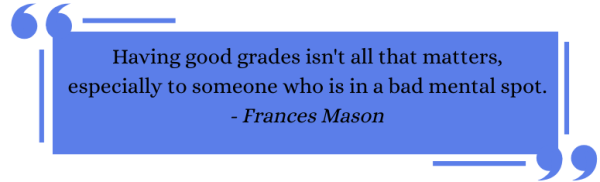
2. Another significant sign is a decline in school or work performance. Performance in school or work can decrease significantly without proper mental care. Good mental health is important for productivity, unbeknownst to many people. Having good grades isn’t all that matters, especially to someone who is in a bad mental spot. If someone has a decline in school or work performance, you might not know the full story.
3. A third sign is withdrawal from activities, which can occur when someone has poor mental health. Though this is not always the case, it is still a big thing to look out for. Having someone to talk to is very important, so when someone retracts from social activities, it is a major sign that someone has declining mental health. If you notice a pattern of someone who is usually social acting withdrawn, there’s a chance they may have poor mental health.
4. Having less interest in hobbies or activities can also be a sign of decreasing mental health. If someone is losing or has lost interest in things that they love, it is a sign of depression and other mental health issues. Seeing this sign may be difficult in some cases, but it is still an important one. For example, if someone you know used to have a burning passion for something that has faded or completely stopped, this can be a sign of mental health issues.
5. Having generally low energy can be common, though this depends on the amount of sleep someone is getting. You still need to know that having constant low energy with lots of sleep can be a sign of bad mental health. Things like slow movements or actions can indicate mental health issues like depression. Seeing someone moving slowly for no reason daily can suggest mental health problems.
6. Mood swings are another indication that someone is struggling with mental health issues. A mood swing is when someone has extremely high and low points in a short period of time. It is important to know that people experiencing mood swings can’t control them. It often disrupts or ruins relationships, work, and many other things that are important to people. This is a huge sign of mental health issues, that you should know.
7. Another common sign of someone having declining mental health is having trouble concentrating. If you see someone who is usually good at concentrating struggling to do so, it may be a sign that they are not doing so well. Try to remember that you can always help someone, and it doesn’t always have to be direct. Just acknowledging someone’s struggles and helping them get through it can save a life.
8. A final sign of someone having declining mental health is a lack of personal hygiene. Neglecting personal hygiene is very bad for you, yet many people do it when their mental health is declining. It is good to remember that not keeping clean and up to date with hygiene may be hard for some people. Before you call someone “disgusting” or “weird” for lacking hygiene, try to think about what they are going through and if there is anything that you could do to help them out.
Remember that your experiences are not always the same as another’s situation. Before judging someone for something you don’t know a lot about, think about whether they could be struggling. They could have deep mental issues on the inside; not everybody who needs help asks for it.