

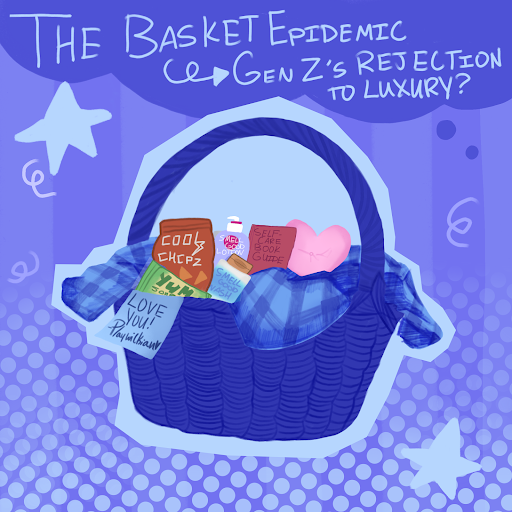
It started with a few cozy TikTok videos: someone arranging snacks, skincare, and fuzzy socks into a simple wicker basket. Then came the hashtags – #BooBasket, #BurrBasket, #BestieBasket – and suddenly, a once-ordinary gift turned into a full-blown social-media tradition. But how did a simple gift basket become the internet’s newest obsession?
The basket trend didn’t explode just because it was cute. It grew because it felt personal. In a digital world where likes and views often replace real connection, these baskets became a way to show affection that can actually be held. They blend nostalgia with modern aesthetics, mixing care-package warmth with TikTok-perfect visuals. And with every new holiday, season, or inside joke, creators found another reason to make – and share – one more basket.
Starting in early 2020, during COVID, self-care gift basket-making videos began popping up on social media. As the year went on, the idea shifted toward an overtly aesthetic vibe, with people creating baskets for birthdays and special occasions.
By the time Halloween 2022 rolled around, millions were crafting themed Boo Baskets for their partners, friends, and family, each one more aesthetic than the last. With more seasonal variants being created for each new holiday, the trendy baskets became the format for gifts.
For many, the baskets became an easy solution to the dreaded gift-giving season. Having a variety of looks and price ranges, a basket could be made for any event; items could easily be interchanged for personalization for each recipient, and there is no set price point for every basket.
This freedom, while still having a set guideline for what gifts are “essentials,” allows the maker to reinvent each basket for their own needs.
Of course, like any trend that spreads quickly online, basket-making brings both benefits and challenges. Despite the aesthetic appeal, social media has moved this thoughtful gift into a formatted “must” that has lost its meaning and warmth.
The social pressure that follows the trend has pushed the gift-givers into a set of expectations. As every “personalized” gift basket gets published online, expectations go up, as well as the price tag. When everyone is trying to outdo the other for the best gift basket, many push for more and more.
With a set format, the baskets become overused and unoriginal, all having the same set list of “necessities”: candle, fuzzy socks, stuffed animals, blanket, and a cup, plus whatever “specialized item” for each individual person. Not only does this create an unoriginal set list, but it also creates filler and waste, as every basket for every holiday has the same list.
However, the imperfections haven’t stopped the trend from growing – if anything, its rise has strengthened its place in Gen Z’s new rituals, becoming a symbol of affection in the digital age of romance.
During these viral basket-making videos, viewers aren’t just watching someone making a basket; they are watching partners show love in a way that feels cozy, intentional, and deeply personal. It didn’t take long for the internet to decide that baskets weren’t just a craft project – they were a relationship standard.
From there, the trend expanded to every corner of the modern dating world. New baskets dedicated to boyfriends and girlfriends became symbols of care that didn’t rely on grand, expensive gifts. Deprived of a generation that grew up online, expressing love through digital interactions, these baskets provide a tangible representation of love.
Today, baskets have become a recognizable love language among Gen Z. Moving away from the pricey gifts and more toward sentimental presents, social media reinforces the rewarding, tender moments, surprise reactions, and relationship storytelling. As a result, many teens now view basket-making as a romantic norm — something a person does to show effort, prove attentiveness, or strengthen a bond.
In many ways, the trend’s influence goes deeper than TikTok views. The baskets redefine how Gen Z imagines romance: less luxury, perfection, and grandeur, and more about personalization and thoughtfulness.
Whether used for anniversaries, apologies, holidays, or “just because,” these baskets have become a modern symbol of care, weaving themselves into the everyday idea of gifts.