

As judging grows more erratic, themes become increasingly constrained, and online discourse turns volatile, Season 34 of “Dancing with the Stars” (DWTS) exposed a shift. The dance competition is losing its identity as it operates more like an engagement algorithm. A show once built to reward skill now crowns contestants with the most social-media traction.
Season 34 concluded on Nov. 25, with wildlife conservationist Robert Irwin and his professional partner Witney Carson winning the Len Goodman Mirrorball Trophy.
Many eliminations during the season stirred up criticism, but the noise raises a question: Have fan votes always mattered more than scores?

What the show used to be
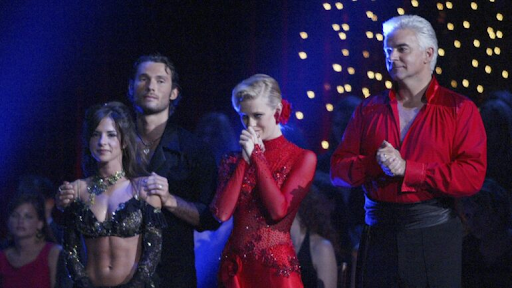
The results of the first season stirred up outrage. Actress Kelly Monaco won the Mirrorball Trophy over actor John O’Huley, considered the season’s frontrunner. Fans alleged that Monaco’s win was a set-up, and the network hosted a rematch that named O’Hurley the winner.
While controversy has always been ingrained in the show, it became incredibly apparent with the rise of social media. When the first season aired in 2005, around 300,000 people used a social media site, with MySpace and YouTube being the most popular.
As new platforms like TikTok and Instagram gained popularity, so did the ability of fans to mobilize votes for their favorite contestant.
“Social media has definitely contributed to a spike in younger audiences gaining interest in the show, especially with specific casting of influencers and stars that have large online fan bases,” an anonymous viewer said.
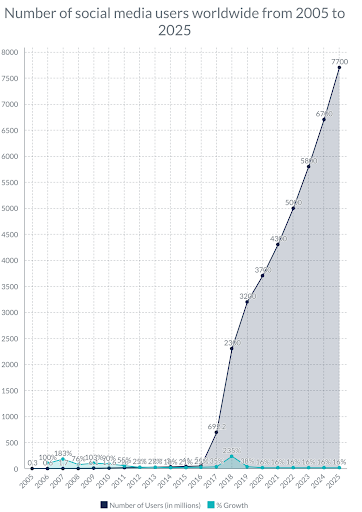
The number of social media users only increased as the years went on, along with the introduction of new apps. TikTok, launched in September 2016, had 500 million users by mid-2018. In 2025, over 5.6 billion people use social media globally, making up 68.7% of the world’s population.
With the growth of social media, the influence it had on DWTS became apparent during Season 27.
A controversial win
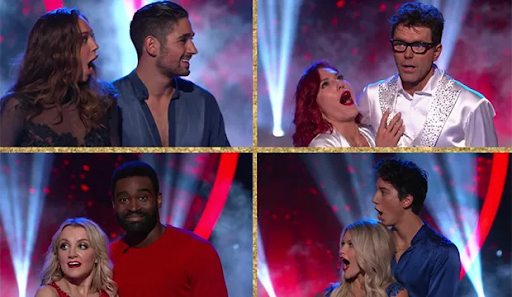
The case of podcast host and Season 27 winner, Bobby Bones, is often used to demonstrate how integral fan votes are in selecting a winner. Bones took home the Mirrorball Trophy despite having the eighth-best average score during his season.
Many viewers believed that his dance technique was inferior in comparison to fellow contestants such as actor Milo Manheim, whose loss some see as the “biggest robbery” on the show.
But the question remains: how did Bones win? An amalgamation of low overall show viewership, a dedicated fan base, and a one-night finale that made viewers in certain time zones vote blindly.
Many fans called the show a popularity contest, with former host of the show, Tom Bergeron, calling Bones’ win “the most shocking moment of his career.”
In response to the shock, the judging protocol was promised to be updated the following season.
“We have made some adjustments to the judging because we got a lot of complaints,” Judge Carrie Ann Inaba told “Entertainment Tonight.” “We listened to what everybody said about what happened last year.”
The following season also introduced a shift in fan voting. Instead of the voting period lasting hours after the live show aired, votes could only be cast during the East Coast live viewing time. West Coast viewers could still vote, but couldn’t see the live performances.
The voting system has remained the same ever since it was updated.
The rise of the online fanbase
With social media integrating into the show’s identity, viewer engagement has shifted from casual voting to digital campaigning. From TikTok dances to fan communities, contestants’ survival becomes increasingly dependent on their online following.
Competitors used to enter the ballroom on equal footing. While some could be controversial or famous, they were judged on their weekly improvement. Now, contestants with massive online followings can outlast the most technically skilled dancer.
During Season 32, YouTuber Lele Pons was eliminated from the competition before actor Barry Williams and influencer Harry Jowsey, despite scoring higher than both of them for the seven weeks she competed.
Many fans voted for Jowsey due to his rumored “showmance” with his professional partner, Rylee Arnold. Arnold had also amassed over 650,000 TikTok followers at the time, having many dedicated fans who wanted her to stay in the competition as long as possible.
Some viewers were charmed by Williams’ charisma, voting for him despite his weekly placement near the bottom of the leaderboard.
“You were BY FAR my favorite and got my vote every week,” an Instagram user commented.
The determination of passionate fans became very apparent during season 34.
Season 34: Inconsistency and bullying
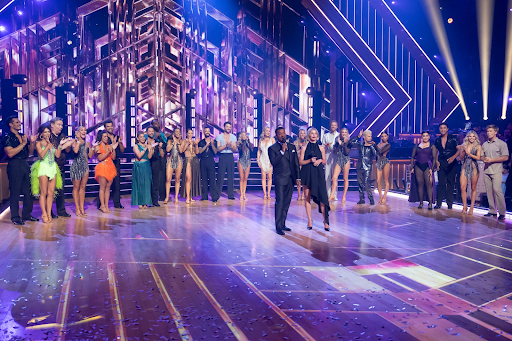
Season 34 saw an increasingly high number of votes and viewers throughout the season. The finale saw a record-breaking 72 million votes, a 31% increase from the semifinals.
Alleged voting manipulation was brought to attention before the finale took place. A TikTok user revealed a message sent from someone claiming to use multiple emails to vote for their favorite couple.
User @enolsttayw shared a screenshot from a fan who claimed to use 17 different email addresses to cast 220 votes for influencer Alix Earle and Valentin Chmerkovskiy. The message alleged that fans of Irwin and Carson practiced the same methods to help the couple advance in the competition.
“The new fandom is crazy,” the TikTok user expressed. “They’re bonkers.”
Contributing to the season’s controversy, many viewers noticed inconsistencies among the judges.
Inaba has been known as the “lift police” ever since the beginning of the show, but seemed to ignore her role when Irwin performed a lift in a foxtrot, a dance where lifts are not allowed.
Inaba forgot her generosity the following week when influencer Whitney Leavitt performed a Viennese waltz, and docked a point for two “hops” in her routine.
“There was a bit of a hop, so I had to mark for that, but what you did, please, no one can take that away from you,” Inaba said. “That was outstanding.”
Leavitt was eliminated during the semifinals after consistent accusations of favoritism and backlash from the new season of “The Secret Lives of Mormon Wives.”
She discussed the backlash and performed a freestyle — a performance essential in the finale — on the “Call Her Daddy” podcast.
The performance ended with a message reading “[s]ocial media is bad for your health.”
Leavitt’s professional dance partner, Mark Ballas, spoke about their goal for the freestyle.
“We were just gonna go on that ride together, and it was a classic song,” Ballas said. “There was going to be emotions of highs and happiness, and then moments of darkness and pain and struggle.”
The social media hate challenged the pair as they had a couple of hard weeks. The accusations of favoritism continued until their last week on the show.
“That was a week one dance, but because she’s favored, she gets away with it,” an Instagram user commented. “I said what I said.”
Everyone is entitled to their own opinion, as some viewers have pointed out.
“People can share any opinion & hatred they have towards a contestant,” an anonymous viewer shared. “That is, unfortunately, a natural consequence that comes with the security of hiding behind online devices.”
The takeaway
What’s striking is that it took 34 seasons for DWTS to acknowledge the consequences for the online ecosystem now ingrained in the show.
Leavitt and Ballas’ message feels so important because it’s the first time a couple pushed the show to confront that the machine that fuels its popularity can take a toll on its contestants.
Fan engagement has always been woven into DWTS, presented as democratic and enjoyable. Season 34 forced the show to confront the cracks in that narrative. Social media produces mob mentality and dehumanization that seems to grow with each season.
Ultimately, social media will continue to be a part of DWTS with no incentive to change the voting system. After all, the controversies and speculations result in high engagement numbers and relevance.
At the end of the day, DWTS is a ballroom competition, not a presidential election. The show maintains its integrity when viewers vote for the couple that moves them rather than attempting to spite another contestant.
The ballroom is meant to be a place for expression, not aggression. Season 34 served as a reminder of what happens when online noise becomes louder than the quality of dance.