

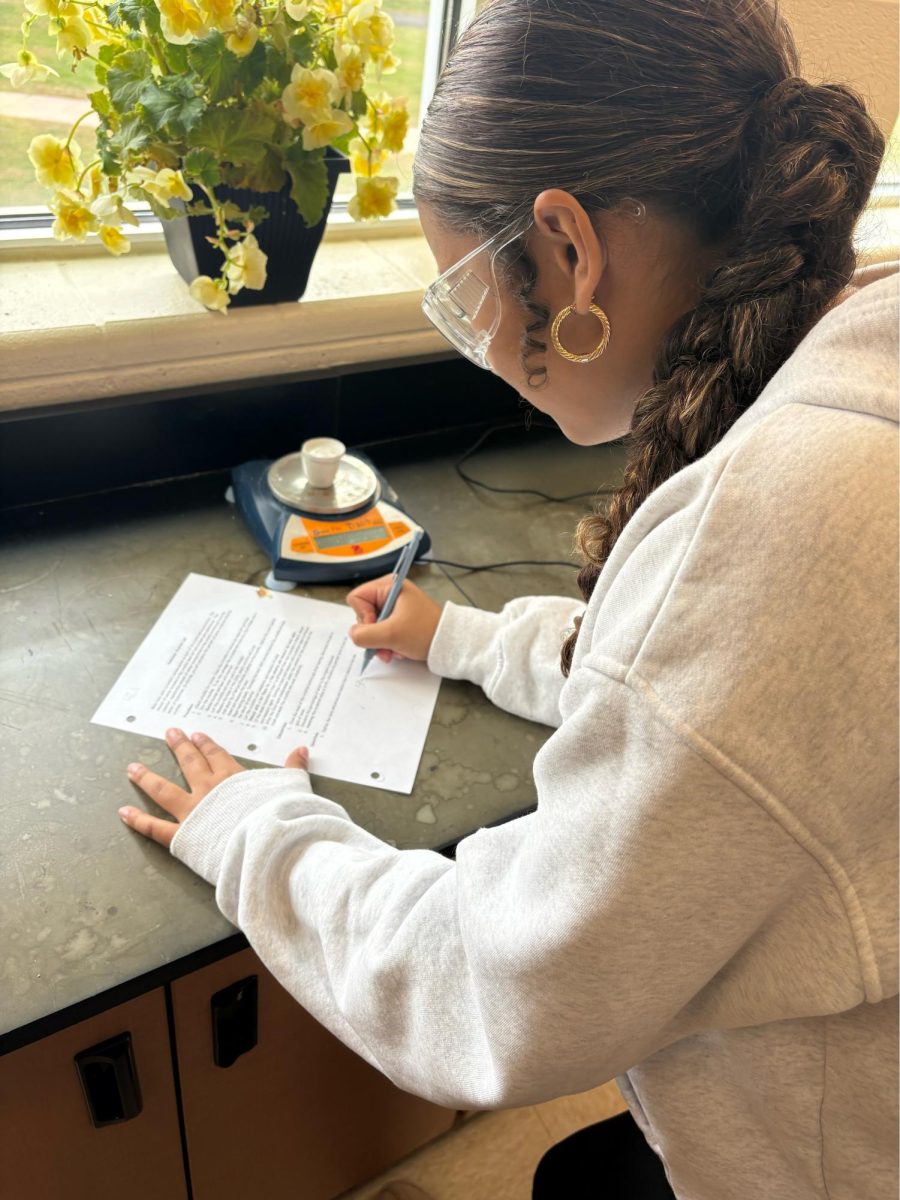
The District school board is reconsidering separate lab periods in a decision that has stirred strong reactions across students, teachers, and parents alike at Neshaminy High School (NHS). This change, taking place within the next school year, aims to streamline the new theoretical foundation and pull away from the practical, hands-on approach many are used to.
While school administrators say this adjustment is meant to create a more overarching premise, many teachers and students worry that the move will cause more harm than good.
For years, lab periods have allowed students to advance their knowledge within science courses — such as biology, chemistry, and physics — by performing experiments without the 45-minute time constraint of one class period. Without these separate periods, teachers must fit these experiences into their daily lesson plans, find other creative solutions, or scrap them altogether.
This decision is not new. Mentions of a similar plan to remove labs were questioned last year, but were pushed back by many students, parents, and teachers. Many petitions had sprung up at the mention of disappearing labs, and new ones are opening for this recent attempt.
The current plan is to remove most lab periods across the NHS. For the few who take the AP science courses offered at NHS, labs will still be available. But for most students, labs will become a distant memory. Many classes will lose the physical aspect that drives learning and discovery.
As “phenomena” is introduced into the curriculum, topics and lessons are driven away from practical learning that teaches students directly, and are twisted into theoretical lessons meant to allow students to think outside the box.
“What we’re doing is we’re changing the schedule so that instead of science having a science period every single day and then once in the six-day rotation having a double period. What we’re doing is we’re just taking that double period away,” explained Stephen Garska, the principal at NHS, to clear the misconceptions around the removal of labs, “you should still be doing lab activities in the classes that don’t have that additional science period; they should still be doing lab activities now.”
This decision is being made to correct the issue concerning the equitability in the schedules. Having double-period labs results in an extra class being taken that day. This results in students being taken out of other courses: art and music electives, lunch, study hall, and Spanish class.
Many students are concerned about how this change will affect their college admissions and transcripts, as some colleges require two or more science lab courses. Garska explained how there will be no change, as the courses will be worth the same amount of credits and will be listed the same as in prior years.
Head department chair for science, Brian Suter, explained how, during this past fall, he was “involved with a committee where they presented a lot of data on the labs and how students were impacted, and [he] presented how [the science department’s] standards have changed.”
During this committee meeting, they brought up the concerns of other students and how many are missing out on courses due to labs. This isn’t just affecting the courses, but the students’ grades in these other courses, and the teachers having to work around the off-schedules.
“I don’t want to ever lose science time, but at the same time, I recognize that maybe the system needs to shift to a 21st-century model, so I’d like to see more time consistently so students can conduct investigations regularly,” Suter said.
Despite the push from the school board, many teachers say that time is the key ingredient that makes labs meaningful, and that this decision may make it difficult to maintain the same quality of learning.
Dana Puskas, a chemistry teacher at NHS, explained that, regarding chemistry specifically, “[lab] periods allow students to truly work with the chemicals and observe how they react. They learn to recognize that expectations and reality do not always agree. They learn how to pivot and edit their methods to get desired results or discover why results did not match expectations. “
Without this extra time, the “phenomena” structure becomes the primary curriculum, switching classrooms over to theoretical learning. Hands-on experiments will become an echo of the past as videos and simulations will take their places.
“I know that STEELS and the District want us to be doing more hands-on activities more frequently, and I love this. But unique to Chemistry reactions and their required collections and analysis simply cannot be completed to a degree that is meaningful in 45 minutes,” stated Puskas.
Kerry Hammon, the building representative for the union and executive secretary has stated how she thinks that this decision is “going to be a detriment to the students. I think science students need the extra time, the 90 minutes, to be able to really do the science, to do the investigations, to do the experiments, to make mistakes, and be able to go back and revise their mistakes, and if we tried to do that in a 45 minutes single class, something’s got to be taken out and unfortunately that’s going to be the revision.”
New courses have also been in recent discussion since the news of lab removal has hit NHS.
“Adding a new course is a really challenging piece because you have to be able to develop the curriculum on your own or find a curriculum that matches, so it does take a lot of effort on top of what we’re already doing,” Hammon explained.
In the physics world, Hank Oppenheimer has stated that, when it comes to the concern of time and lesson plans, he is “not concerned about my lesson plans. I’m concerned about students’ learning. We are losing 1/7th of our teaching time – which, for reference, is more than half a marking period. We need time to entirely revamp the curriculum. We need to get together and decide what we are no longer going to teach, and students are no longer going to have an opportunity to learn.”
“Lab periods are an integral part of the science learning experience. Some experiments take time and can’t be interrupted or stopped for convenience,” explained Oppenheimer. These labs aren’t just an extension of a class period; they are a different learning experience as a whole.
Among students, the reactions have been mixed. Many science-oriented students say they worry about losing valuable preparation for future, harder work.
During a student body survey across the NHS, 85.2% of students who participated stated that they were thinking or planning on going into a science-related career. Of these same students, 81.5% also agreed that removing labs would be a bad decision.
One anonymous student stated that while “[this] change will not affect my interest in science, it will most definitely affect my performance in the future, as taking away time from science courses will make it more difficult to understand and learn new material in science.”
The labs provide structure and opportunities for students to excel further in their studies. Hands-on work and problem-solving skills apply not only within the classroom but within daily life.
“The most valuable part of my lab periods is getting to apply the concepts taught in class to a real-world scenario, or physically seeing the processes or phenomena happening in real time. Without these periods, I feel that I would be much less prepared in my courses, especially since I always take honors courses in science,” stated another student concerning the value of labs.
Students have pointed out the backlash to this recurring decision, mentioning the attempt to remove labs last year that resulted in petitions, protests, and resistance from parents, students, and teachers alike.
“I’m angry that the school board decided this, especially considering the intense public backlash when they tried this last year. There is a reason why people want to keep lab periods, and there’s a reason why [they] were implemented in the first place, and that was to improve student understanding of course material,” one student said.
Many students feel as if the choice was made without the consideration of those who are affected most, such as science-focused teachers and students.
One student stated how, despite the school board’s inclusivity in making decisions, “[clearly] the science teachers and those who truly appreciate science were not involved in this decision. It shows the school doesn’t truly care about the potential that students carry, as these labs are an integral part of our learning.”
Some students are also worried about where the school’s values are, with one student explaining how “[it] shows that Neshaminy cares more about ball tossing than any other future career. Most students from this school are leaving in hopes of going into a business, theatre, or science career. Neshaminy isn’t distributing the funding correctly.”
This change isn’t just affecting the NHS, but will also affect future generations. During eighth-grade course selection assemblies across the district, the addition of a lab period is broadcast as a new, fun experience to better students’ education. With the removal of labs, even though these upcoming freshmen don’t know how lab periods work, they will miss vital skills that prepare them for their future careers.
Students and teachers have been asking about other options, along with separate lab and non-lab science courses. These options allow students to choose their academic pathway. Garska has explained how this change in students’ schedules will allow for openings for more course selections.
This decision is final, with Garska stating that he “doesn’t see us going back on this decision.” With petitions and protests starting up, some feel that they can change the story. However, just as in the previous year, it will only delay the inevitable. As students and staff adjust to the upcoming changes, one question lingers in the halls: Can a hands-on course like science truly be learned through theories alone?